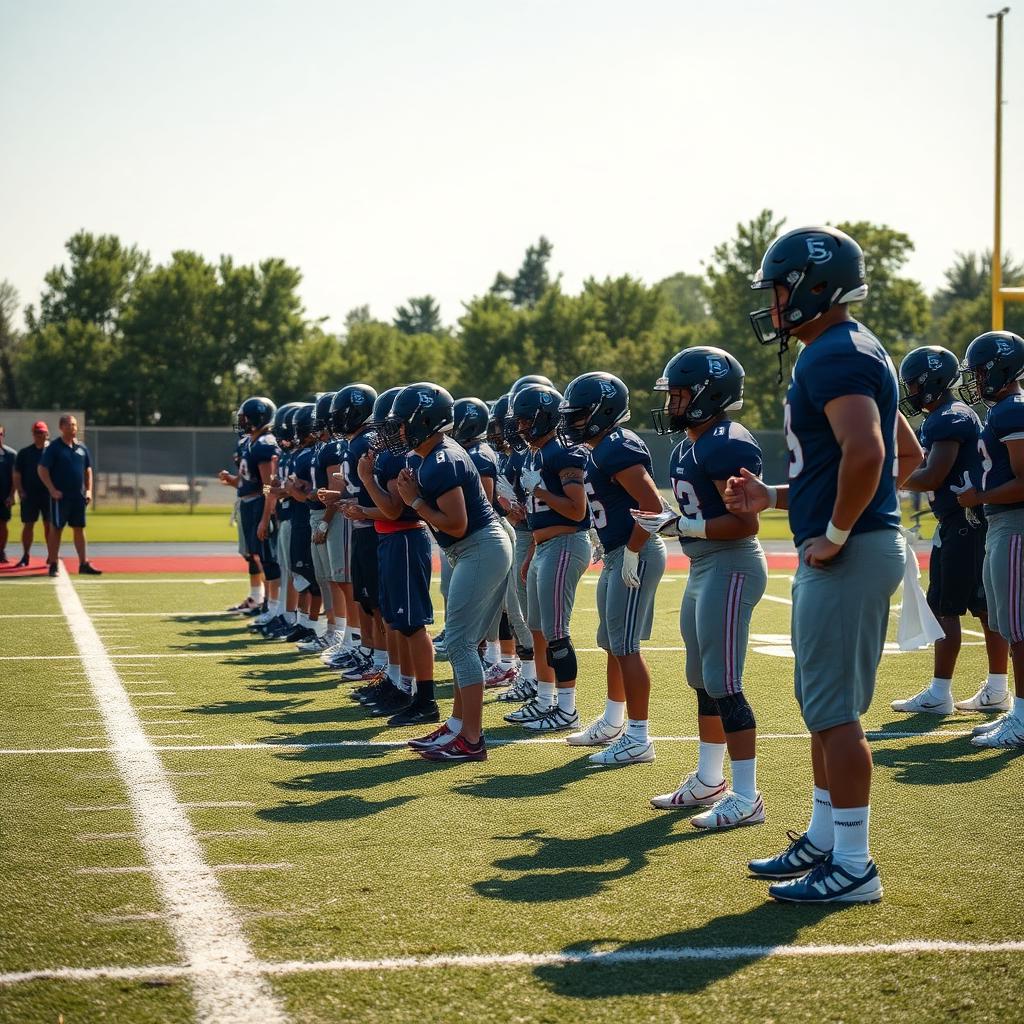
Camp Season Survival Guide for Underclassmen
Camps are where you get measured, evaluated, and offered. They're also where most kids burn themselves out. Here's how to pick the right ones and crush them.
Camp season is where recruiting actually happens. Coaches see your tape, like your tape, and then they want to see you in person. They want to measure you with their own staff. They want to watch you compete against other recruits. They want to see how you carry yourself, how you take coaching, and whether you can perform when you're tired. Camps are the in-person interview.
But camp season is also a trap. Kids spend three thousand dollars and three months driving around the country to every camp they can find, show up exhausted, run a bad forty, get measured short, and leave with no offers. The camp season is won by being selective, prepared, and rested. Here's how.
Pick the right camps
There are four kinds of camps. You should know which one you're going to and why.
College position camps: hosted by a specific college program, focused on your position. These are the most valuable. You get to compete against other recruits, get measured by the college's own staff, and meet the position coach who would recruit you. Go to these.
College one-day camps: hosted by a specific college, open to all positions. These are valuable if you're targeting that specific school. You're one of three hundred kids, so you need to stand out fast.
Combine-style camps: hosted by neutral third parties like Rivals, 247Sports, or Under Armour. You get a verified measurable, a national ranking opportunity, and exposure to multiple programs. These are good for verification and visibility, less good for getting a specific offer.
Showcase camps: pay-to-play events that promise exposure. Most are not worth the money. Some — like Adidas Pipeline or Nike's regional combines — are real. Most are not. Research before you pay.
How many to attend
If you're a sophomore: two to four camps in the summer, max. Go to one combine to get verified, one or two position camps at your top-target programs, and one local camp to test yourself against in-state competition.
If you're a junior: four to seven camps. You're getting evaluated for offers now. Focus on programs that have shown real interest.
Don't go to ten camps. You'll be drained, your forty time will get worse not better, and your measurables will lock at numbers below your real ability.
Prepare your body
Camp performance depends on the four weeks of training before the camp, not the day of the camp. Specifically:
Four weeks out: increase your sprint volume. Add two extra running days per week, focused on top-end speed and ten-yard fly times. Your forty is decided in the first ten yards.
Two weeks out: peak your strength training. Add some heavy explosive work — power cleans, box jumps, broad jumps — to prime your nervous system.
One week out: deload. Cut your training volume in half. Sleep more. Eat clean. Hydrate aggressively. You should feel restless, not tired, on camp day.
Day of camp: light dynamic warmup, mobility work, a few buildup sprints. Don't show up cold.
What to bring
A bag with: cleats (broken in, not new), turf shoes, your team practice gear, an extra pair of shorts, an extra t-shirt, athletic tape, deodorant, sunscreen, two liters of water, electrolytes, a banana, a protein bar, your high school coach's contact info on paper, a sharpie, and a small notebook.
Always bring extra clothes. You will sweat through everything in the first hour.
How to perform
Three rules for the actual day.
Rule one: in measurables, never half-rep. Your forty, your shuttle, your vertical — give everything on the first attempt. The first attempt is the one coaches watch. The third attempt is for your record book.
Rule two: in one-on-ones, win your reps clean. You don't need to dominate every rep. You need to win the ones that matter and never look bad on the ones that don't. Losing a rep against a top-ten national prospect is fine. Losing a rep against a kid no one's heard of is a problem.
Rule three: take coaching. When a college coach pulls you aside and corrects your stance, do exactly what he says, immediately. Don't argue, don't explain, don't say "my high school coach does it this way." Adjust, run the rep, and execute his coaching. Coaches are evaluating coachability as much as ability.
What to say
When a coach introduces himself, look him in the eye, shake his hand firmly, and say your name and your position. "Coach, I'm Josiah Washington, defensive end, class of 2029." That's it. Don't ramble. Don't list your stats. He'll ask if he wants to know.
When a coach asks you a question, answer in one or two sentences. Coaches notice kids who can have a normal conversation. They notice kids who can't.
When a coach hands you his camp business card, take it, write his name and the camp date on it that night, and email him a thank-you within forty-eight hours.
After the camp
The first thing to do after the camp is send a thank-you email to every coach you worked with. One paragraph. Thank him for the rep, mention one specific thing he taught you, and ask if there's anything else you can send. That email gets you remembered.
The second thing is to update your Hudl page with any verified measurables from the camp. Verified numbers are worth more than self-reported numbers, and coaches will check.
The third thing is to recover. Don't train hard the day after a camp. Sleep, eat, hydrate, and let your body rebuild before the next event.
The honest truth
You will not get offered at every camp. You may not get offered at any of your first three camps. That's normal. Camps are a long game. The kids who show up early, work hard, take coaching, and follow up consistently are the kids who end up with offers — even if it takes six or eight camp invites to get the first one. Patience, preparation, and effort. Every single time.