Hand Fighting 101 for Defensive Linemen
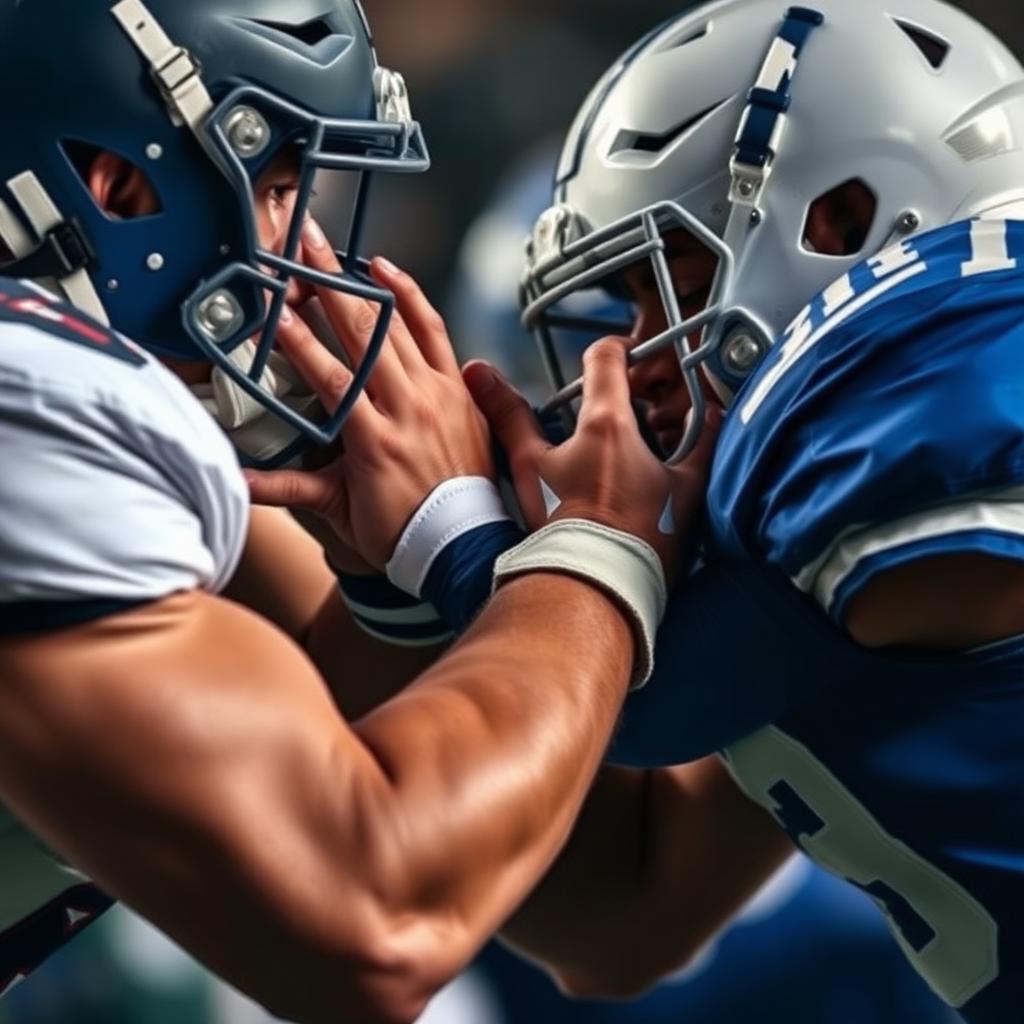
Football is a hand game. The defensive end who lands his hands first wins the rep, every time. Build a hand technique that gives you a winning advantage on every snap.
If you watch one drill at an NFL training camp and try to figure out why those guys are professional, watch the defensive linemen on the hand-fight bag. They will spend ninety minutes a day, every day, refining a punch, a club, a chop, a swat, a rip. To them it's not a drill. It's the whole game. The defensive end who lands his hands first wins. Period.
Why hands matter more than anything
You can be the strongest, fastest, longest defensive end in your conference, and a tackle with bad feet but quick hands will neutralize you. He'll get his hands inside on your chest, lock his elbows, and you're sealed off. You can't get past a tackle whose hands are on your chest. Doesn't matter what your forty time is.
The whole game is fought in a window the size of a sheet of paper — the space between your two chests. Whoever owns that window owns the rep.
The four strikes you need
You need four hand strikes. That's it. You don't need a dozen, you don't need fancy ones with names like "Mongoose" or "Tomahawk." Four.
The punch. Both hands sharp and short, inside the tackle's hands, thumbs up, into his chest plate. This is your power strike. It pairs with the bull rush.
The club. Your outside hand, swung over the top, slapping down on the outside of the tackle's shoulder or wrist. This is your displacement strike. It pairs with the rip and the arm-over.
The chop. Your inside hand, swung downward like an axe, chopping the tackle's outside hand off your chest. This is your defensive strike — you use it when his hand has landed on you and you need to get it off.
The swat. Both hands together or in sequence, batting the tackle's hands away as he reaches for you. This is your reset strike — it gives you the half-tick you need to throw a real move.
That's it. Four. Master those four and you can beat any tackle in your conference.
The principle of independent hands
Most defensive ends throw both hands at the same time, every time. That's a problem. If both hands are doing the same thing, you only have one weapon. Independent hands — the inside hand doing one job, the outside hand doing another — give you two weapons on every snap.
Example: a bull rush with independent hands. Inside hand punches into the chest plate to control and lift. Outside hand clubs over the top to swat away his outside arm. Now you can rip through with the inside arm because the outside arm has cleared the space.
Train both hands separately. Use a heavy bag. Throw twenty inside-hand punches. Reset. Throw twenty outside-hand clubs. Reset. Then throw combos: punch-club, punch-chop, club-rip. Build the catalog so it's automatic.
Grip strength is a real weapon
A defensive end with crushing grip strength can latch onto a tackle's chest plate or shoulder pad and pull him out of position. A defensive end with weak hands gets his hands knocked off and re-locked every rep. Grip strength is trainable and undervalued. Buy a pair of Captains of Crush grippers. Train your grip three times a week. Add farmer's carries to your strength program. In three months your hand power will be different.
Punch placement
Your punches have to land inside the tackle's hands. Inside hand position is everything. If your hands land outside his hands, he locks you out and you're dead. If your hands land inside, you control the rep. Aim for the bottom of his chest plate, not the top. Low and inside.
The strike is short and sharp — six to twelve inches of travel, with the explosion coming from your hips and lats, not from your arms. A punch that travels two feet through the air is a slap. A punch that travels six inches with your whole body behind it is a strike.
The rule of "see hands, hit hands"
Every snap, your eyes go to the V of the neck for the snap read, and then they shift to the tackle's hands. If you can see his hands, you can hit his hands. Most defensive ends watch the tackle's helmet through the rep, which means they're a tick late on every hand strike.
When you see his hands move, swat. When you see his hands lock, chop. When you see his hands open, punch through. The hands tell you what to do. Watch them.
Drill block
Five drills, five minutes each, three times a week:
One: heavy bag punches. Two hundred reps, alternating hands, focusing on inside placement and hip drive.
Two: club bag. One hundred and fifty reps, outside hand only, focusing on the over-the-top arc.
Three: hand fight live, against a partner with a shield. Sixty seconds on, thirty seconds off, five rounds. Beat his hands to your chest.
Four: grip work. Three sets to failure on the Captain of Crush, plus two sets of one-minute farmer's carries.
Five: shadow strikes. Stand in your stance, no bag, no partner. Throw your four strikes at full speed in combinations of three. This is footwork plus hands, and it shows up on every Friday-night rep.
Hands win. Train them like they win.